Your Bonuses: Metabolic Test, Metabolic Diets & Stomach Flattening Toolbox
Directions:
1. Take the Metabolic Test.
2. Read the test results and Metabolic Diets below the Metabolic Test.
3. Get your Stomach Flattening Toolbox further below.
E-mail results to doug@dougsetter.com
Metabolic Type Questionnaire
1. Do you tend to get angry?
a. Easily
b. Almost never
c. Occasionally
2. Do you tend to get anxious?
a. Easily
b. Almost never
c. Occasionally
3. Your appetite is:
a. Above normal
b. Below normal
c. Normal
4. You find it easy to:
a. Lose weight
b. Gain weight
c. Maintain weight
5. Your ability to concentrate is:
a. Excellent
b. Poor
c. Normal
6. You tend to crave:
a. Cookies, candy bars, dessert
b. Bread, pasta, bagels
c. Cravings vary
7. Your moods tend to be:
a. Seldom sad or depressed
b. Depressed or withdrawn
c. Normal ups and downs
8. Your hair is usually:
a. Dry
b. Oily
c. Normal
9. Your skin is usually:
a. Dry
b. Oily
c. Normal
(Optional: Name Blood type:_____)
10. Eating before bedtime makes you:
a. Toss and turn all night
b. Feel good
c. Indifferent
11. A meal mostly of fruit makes you feel:
a. Satisfied
b. Unsatisfied and jittery
c. Pretty satisfied
12. A meal containing meat makes you feel:
a. Satisfied
b. Tired and sluggish
c. Usually better
13. During the day, you:
a. Sometimes forget to eat
b. Get hungry often
c. Eat only 3 times per day
14. You experience swelling:
a. Rarely
b. Frequently
c. Occasionally
15. Emotionally, you tend towards:
a. A hot temper
b. Calm, cool and collected
c. Occasional emotional upsets
16. Your endurance is
a. Enhanced
b. Poor
c. Normal
17. You lose energy after eating:
a. Meats
b. Fruits or sweets
c. You have no energy loss
18. You exercise:
a. Frequently and enjoy it
b. Seldom, and dislike it
c. Sometimes and enjoy it
19. You fall asleep:
a. Easily
b. With difficulty
c. Within half an hour
20. You feel fatigue:
a. Seldom
b. Often
c. Occasionally
21. Your anger develops:
a. Quickly
b. Slowly
c. Occasionally
22. If exercising, you like to choose:
a. Intense aerobic exercise
b. Weights and machines
c. Either one
23. At a buffet you tend to choose:
a. Fruits and desserts
b. Meats and fatty foods
c. A bit of everything
24. You prefer food portions to be:
a. Small
b. Large
c. Medium
25. For breakfast, you prefer:
a. Dry cereal, toast and coffee
b. Cooked cereal, juice, coffee and toast
c. Eggs, meat, toast and butter
26. You tend to get hungry:
a. Hardly ever
b. Often with strong hunger pains
c. Occasionally
27. Your blood sugar is usually
a. Low
b. High
c. Normal
28. You choose snacks like:
a. Fruit, cake or candy
b. Hardly ever
c. Sometimes
29. You choose snacks like peanuts, cheese or potato chips:
a. Rarely
b. Often
c. Sometimes
30. Your breakfast is usually:
a. Skipped
b. Large
c. Average
31. You enjoy fatty meats:
a. Rarely
b. Often
c. Sometimes
32. You enjoy potatoes:
a. Indifferent
b. Quite a bit
c. Sometimes
33. You like raw salad and vegetables:
a. Quite a bit
b. Indifferent
c. Sometimes
34. You tend to feel too warm:
a. Very rarely
b. Frequently
c. Rarely
35. Your hands and feet tend to be cold and clammy
a. Often
b. Rarely
c. Sometimes
36. You are most alert:
a. Bright and early
b. Around noon
c. Whenever you get up
37. You tend to be impulsive:
a. Frequently
b. Rarely
c. Once in a while
38. You tend to think that you are unhealthy:
a. Rarely as you have a sense of well being
b. Frequently
c. Occasionally
39. Around evening, you tend to:
a. Go to bed early
b. Come Alive
c. Gradually slow down
40. Regardless of what you eat, you:
a. Have trouble gaining weight
b. Gain weight easily
c. Have stable weight
41. Your pulse rate is:
a. Usually fast
b. Often slow
c. Normal
42. Your reflexes tend to be:
a. Fast
b. Slow
c. Normal
43. Unexpected noises tend to:
a. Startle you
b. Cause you to react slowly
c. Sometimes startle you
44. Your sex drive is:
a. Elevated
b. Fairly low
c. Normal
45. You need extra sleep:
a. Rarely
b. Often
c. Occasionally
46. You wake up in the middle of the night:
a. Rarely
b. Frequently
c. Occasionally
47. Your mood:
a. Changes frequently
b. Remains even
c. Changes on occasion
48. Your stamina is:
a. Above normal
b. Low
c. Normal
49. Whatever you eat turns to fat:
a. Rarely
b. Frequently
c. Only with excessive eating
50. You tend to worry:
a. Frequently
b. Seldom
c. Occasionally
METABOLIC DIETS
What Metabolic Type Are You?Total up the number of answers to A, B & C. Most people will answer the majority of one of three types of metabolisms:
A = Fast Burner B=Slow Burner C=Mixed Burner
METABOLIC TYPES
Determining your basic metabolic type can help you to better understand your body’s basic needs in terms of nutrition, exercise and rest. Fast and slow metabolisms, also known as fast and slow oxidizers or burners, have been written about for decades. In the book, The Balance, Oz Garcia describes three basic types of metabolisms: Fast, Slow or Mixed Burner.
FAST BURNERS
Fast burning metabolisms are usually found in hyperactive people who often thrive on anxiety and irritability. They are often impatient Type A personalities who seem to have their adrenal glands stuck on high. They tend to have bursts of energy and have difficulty relaxing. The fast burner often has an addictive type of personality and displays obsessive traits or develops an abuse of drugs or even food. Fast Burners may not all be lean and active, but they are constantly looking for quick boosts of energy, usually through quick carbohydrate fixes.
If you are a Fast Burner, you probably skipped the metabolic test and are in a hurry to find answers. Fast Burners, like yours truly, burn out their mineral supplies like there is no tomorrow and have difficulty building muscle. This is why I disagree with diet pills that are mild stimulants that contain substances such as theobromide, caffeine and ephedrine. These “quick-fixes” will only tire you out in the long run.
A Fast Burner must maintain a steady flow of energy from their food. Take a typical eating pattern:
Breakfast: Coffee, toast, fruit
Snack: Coffee or pop and a donut
Snack: Coffee, muffin or donut
Lunch: Juice, yogurt, salad with dressing, bagel
Snack: Diet Coke
Supper: Chicken breast, boiled potato and pre-frozen mixed vegetables
Snack: Apple
It is painfully obvious that this eating pattern is packed with sugar at regular intervals. While it might fit the low-calorie, low-fat format, it is going to give the eater more ups and downs than a runaway roller coaster.
An effective fast-burner eating plan would be more like this:
Breakfast: Water, oatmeal, three egg whites
Snack: Peanut butter on whole grain crackers or chicken fingers
Lunch: Chicken or salmon salad
Snack: Protein shake
Dinner: Water, lean beef, stir-fried or steamed vegetables
Snack: Water, slice of turkey breast
The Fast Burner can tolerate higher amounts of fat and oil as they need the gradual release of their concentrated energy. Most fruits and fruit juices are high in fruit sugar (fructose) and should be avoided. However, vitamin-rich fruits such as apples, pears, apricots and all types of berries are okay.
When I find six small meals a day a nuisance, I try to have at least two good sit- down meals per day. I often did this while I was in the military, while working around the base. I found that I could actually make faster muscle gains by eating fewer meals, but eating those meals slowly.
Those high-speed, Type A people who are too busy to eat must discipline themselves to either prepare their meals in advance (and use plastic containers) or arrange to have two relaxing, uninterrupted meals per day. Many Europeans, like the Germans, eat like this. They have tea and some heavy bread in the morning, a huge (often two hour) lunch and then a moderate supper in the evening. If you have been to Germany, you might have been amazed as I was to see stores close, restaurants fill up and so many people just relaxing during one of North America’s most frantic times of the day. Some might argue that this is a slack attitude. However, from my experience there, I would have to challenge anyone who questioned the productivity or good health of Germany’s people.
If you are a very active fast burner, such as a competitive athlete, you can add more complex carbohydrates, like rice, yams or potatoes, to your diet. As for exercise, fast burners often benefit from anaerobic exercise, such as weight lifting, sprinting, team sports or even yoga. The short duration exercises help build muscle tissue and can have a more calming effect than aerobic exercise.
SLOW BURNERS
On the other metabolic extreme, slow burners tend to be easy-going, have low blood pressure and good digestion and often dislike exercise.
A typical slow burner eating pattern is as follows:
Breakfast: Two waffles with butter and maple syrup, two cups of coffee.
Snack: Apple.
Lunch: Baked potato, egg salad, roll with butter, fruit cup, coffee.
Dinner: Salad with dressing, rice, brownie with vanilla ice cream.
By now you can see the low-food value and high sugar content of most of these foods. This slow burner’s energy is going to drop about an hour after every meal. Unfortunately, many of us have grown to accept that afternoon “dinner drunk” syndrome as being normal. When you eat properly, you can often go back to work feeling satisfied and alert. An effective slow burner eating plan would be more like this:
Breakfast: Two eggs, poached or over-easy, steamed vegetables, one cup of herbal tea.
Snack: Protein shake.
Lunch: Salmon salad with greens, tomatoes, olive oil and lemon juice, one pear.
Snack: Low-fat yogurt or cheese (if you can tolerate dairy) or almond butter and rice crackers.
Dinner: Chicken breast and stir-fried vegetables.
Slow Burners should minimize their fats and oils and stick to whole fruits such as apples, bananas and citrus fruits. Bananas and citrus fruits are high in potassium, which is a mineral that tends to be low in most Slow Burners. Grapefruits have been used for decades for weight loss as they tend to help kick-start a slow metabolism. Be aware that some people are allergic to citrus fruits and might react adversely to them.
MIXED BURNERS
Only about ten percent or less of the population is estimated to be Mixed Burners. If you are one of these, you will have a fairly even flow of energy unless you “fall off of the wagon” from a steady intake of processed foods, coffee and reckless living. However, a Mixed Burner metabolism is not a free ride.
You can take food choices from the other types of burners and determine what works best for you. Sometimes you might perform more like a fast burner and others you might perform like a slow burner. You have to find out for yourself.
SPECIAL DIETS
There are always new and better diets out on the market. Some actually work… for awhile, but are difficult to maintain over a lifetime. If you look through an old bookstore or at the library you will find that many of the “new” diets as simply re-written old diets. For instance, there was a high protein diet described in The Letter of Corpulence by William Banting written back in 1864. Since then, there have been many duplicates of this concept, like Dr. Herman Tarnowner’s Scarsdale Diet or The Atkins’ Diet. While many of these concepts work great in theory for some people, few of them work for everyone all of the time. In the end, you have to find out on your own what works for you.
CLEANSING DIETS
On occasion, I go on a cleansing diet for a couple of days. This diet consists mostly of vegetable juices, soups and some fruits. I couple this kind of diet with regular saunas. After a few weeks of doing this every weekend or every other weekend, I often experience better sleep, clearer skin and better digestion. These short mono-diets and mild fasts can be beneficial if they are coupled with lots of rest. During my younger years, I tried to fast while maintaining a regime that included hard physical work. It left me feeling like a zombie. Therefore, I can only recommend cleansing diets if you are resting and getting the extra sleep necessary. Body cleaning, like house-cleaning, takes energy to do properly. Long fasts without trained health care supervision can be damaging to your health.
NON-ALLERGIC DIETS
This is a fascinating area, where certain foods can cause problems such as intestinal problems, like Irritable Bowel Syndrome, hay fever, attention disorders and even alcohol cravings. I became very interested in allergies at an early age, as I was constantly plagued by sore eyes, nasal drip (runny nose) and sneezing. I was constantly coughing and blowing my nose. I went through school with pockets full of tissue paper. It took me until age 20 to realize that dairy and wheat products were aggravating my hay fever and interfering with my ability to gain weight. As mentioned before, I felt far more alert and energetic when I omitted those foods from my diet.
Typical symptoms of a food allergy are: dark circles under the eyes (shiners), sore eyes, runny nose, fatigue, drowsiness, anger, shortened temper and accelerated pulse. These reactions may take effect anywhere several minutes or several hours after consuming the allergen. This can be a real problem if you have been eating allergic foods all of your life and simply learned to accept the conditions associated with them.
So, how can you tell if you are allergic to a food? If the offending food is new to you, the allergic reactions will tend to occur almost immediately. However, if the food has been consumed since childhood you will likely experience a bit of a coffee-like boost right after consumption. This will be followed by a drop in your energy level, followed by more cravings.
To test yourself for food allergies, try avoiding each suspect food separately for about a week at a time. What is interesting is that you will tend to crave the very foods that you are allergic to. Removing these foods from your diet can be like an alcoholic trying to avoid alcohol. As your body cleans itself of the allergic food, it will experience some withdrawal symptoms, including intense cravings. This is normal. Usually, you can keep the cravings subdued by having a small amount of the offending food. Although the process of removing allergic foods from your diet might take some time to accomplish, it is well worth the effort for the result of feeling better and actually being healthier.
Compiled by Doug Setter, BSc.
www.dougsetter.com
STOMACH FLATTENING TOOLBOX
Disclaimer
As with any new fitness activity, you must start out slowly. Although this book is about fitness, the author and publisher disclaim responsibility for any adverse effects arising from extreme exercise and dieting without the appropriate medical supervision.
Chapter 1: Posture and Health
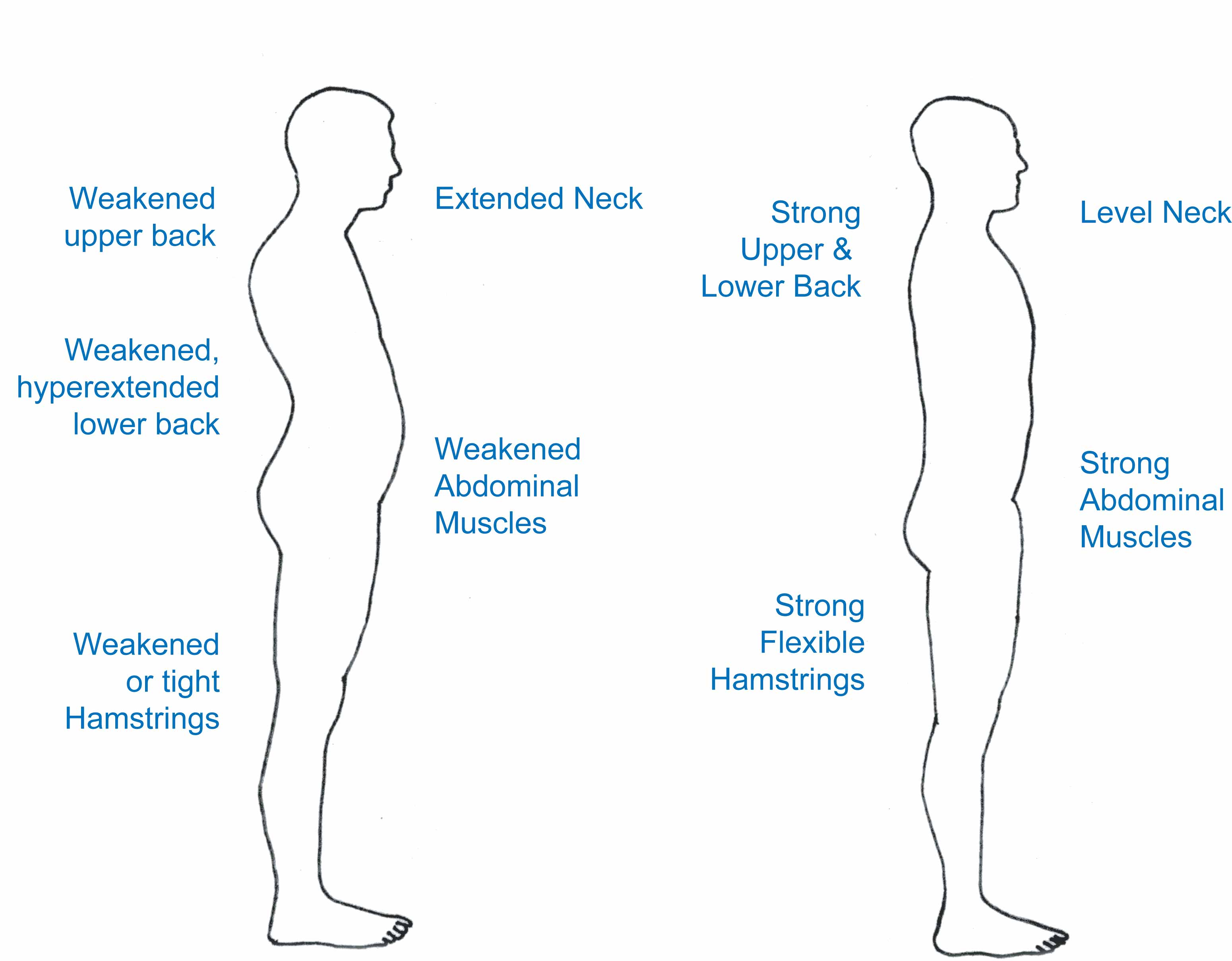
A strong posture allows the human spine to curve naturally and pulls the abdomen in. To check your own posture, place your back and head against a wall. With these points in contact with the wall, there should be approximately a hand thickness of space between the small of your back and the wall.
Maintaining good posture is far easier when the back and stomach muscles are strong and flexible. According to the American College of Sports Medicine, flexible hamstrings and strong abdominals will lessen the risk of back pain.
You can reduce your waistline in 5 seconds just by pulling back your neck and shoulders. Notice how your chest goes out and your stomach draws inward. A good posture naturally flattens your stomach and improves your strength, digestion, confidence and appearance. See the video for improving posture.
For better posture, check out this Posture Training Video.
Chapter 2: Breathing for Greater Energy
Try the following experiment: take a deep breath and then hold it while performing a crunch or sit up. Not much fun is it? Now try letting your breath out as you do a crunch or sit up. It might feel strange, but it should be easier. Note: It is too much carbon dioxide rather than not enough oxygen that causes fatigue. This is why it is essential to breathe out stale air during exercise.
Deep breathing is a long-lost ability for most people. With the exception of singers, public speakers, marksmen, martial artists and some athletes, most people gobble down bits of air mostly through their upper and middle lungs. This restricted breathing uses as little as one-tenth of one’s own natural lung capacity!
For those who would like a little more formal breath training, consider the following techniques that can be practiced just about anywhere. However, do not be fooled by the simplicity of these exercises; they are simple, but effective. Try them and reap the benefits.
BREATHING and ABDOMINAL EXERCISES
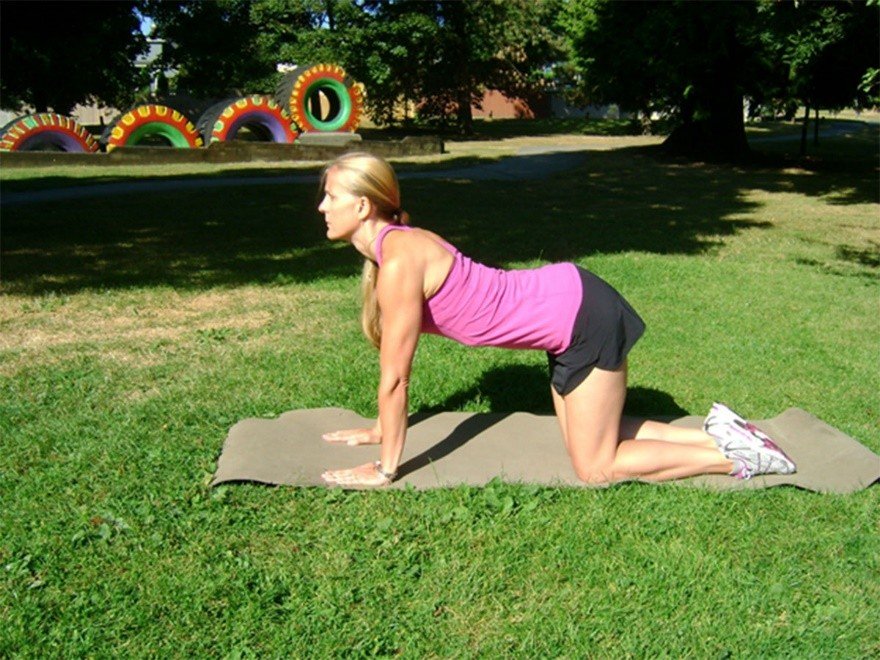
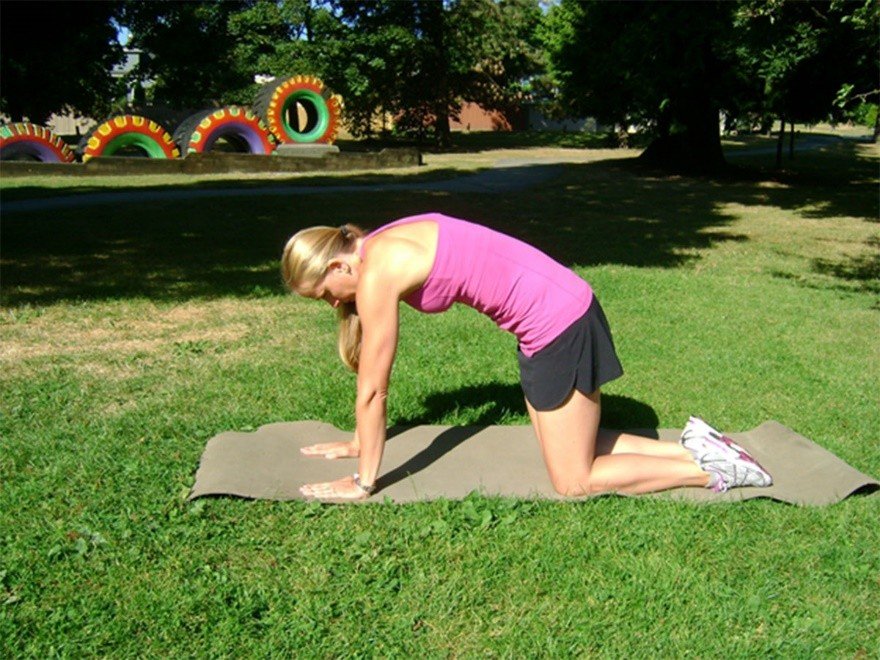
Cat Stretch
1. Position yourself on your hands and knees. Allow your back to hold its normal, supine position.
2.Take a deep breath and exhale fully while hunching your back.
3. Hold for 2 seconds.
4. Relax and inhale.
5. Repeat 4 to 8 times.
Abdominal Breathing
1. Take a deep breath.
2. Force all of the air out of your lungs.
3. When you think that you cannot exhale any more, tighten your abdominals and force out a little more air and then a little more again.
4. Then relax your abdominals and let your lower lungs fill up with air. At first, it will feel like you are running out of air and you might start coughing and feel a bit dizzy. If performed correctly, you should feel this deep in the lower abdominals. Usually it takes about five to ten sessions to learn to do this properly and then it becomes a habit.
You can then perform this gut-tightening exercise at your desk, in your car or standing around. It is the foundation of strong stomach flattening.
Chapter 3: Abdominal Exercises
The following routine is very basic, simple and most effective when you work out the abdominals in the sequence provided here:
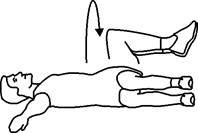
1. First, work the obliques. As these are the body’s stabilizers, they will tend to assist the other abdominal groups during an abdominal workout. You will want to tire them out so that the other abdominal groups get more work. Side-to-side movements, such as leg-overs will work this area.
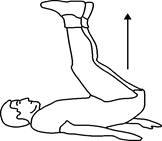
2. Next, work the lower abdominals. As body builders, athletes and formerly pregnant women can tell you, this is a soft area of the body that is difficult to strengthen. Movements such as reverse crunches, hip raises or leg raises will work this area. Again, you want this area pre-fatigued so that you can really work the next stage.
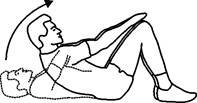
3. Now work the crunch for the upper abdominals. With the other abdominal groups already fatigued, the upper abdominals have to take on most of the workload. This is like most of a rowing team suddenly stopping and leaving two members to keep rowing. The upper abdominals get far more work than if they were cruising along with the rest of the abdominal “crew”.
For optimum training, there should be no more than three seconds in between exercises. Otherwise, each subsequent group of abdominal muscles will recover and end up “sharing the load” with the other abdominal groups. This means less work and less results. It is better to do less repetitions, with NO rests in between, than perform more repetitions, but have long rests in between sets. The no rest method means more work for each set of muscle groups, but also superior results in less time.
If you are a beginner, start with one set of 3-5 repetitions of each movement and work your way up to three sets of 20. Then, and only then, increase the difficulty of the exercise. Remember that the objective here is to improve your life, not shorten it.
Also, remember to start out gradually. I have known too many people, (including yours truly) who have run beyond their capabilities and then spent several weeks recovering from injuries rather than increasing their training gradually. Listen to your body.
Learn more in Flat Gut After 50.
Chapter 4: Nutrition
Restrictive diets will often cause people to lose body fat, but also muscle, bone density and skin tone. A well-nourished person will usually not have food cravings. They do not have “hidden hungers” that come from nutrient-deficiencies.
Without much more discussion, I am only going to advocate what I have seen work. Basically, eat foods that are fresh and high in protein and minimize the junk. For instance, Lynn, a female body builder and figure skater, who trained in my kick-boxing class, regularly ate high protein and complex carbohydrates. Her breakfast was egg whites and oatmeal. She was not bulky. She had an awesomely strong, solid figure.
After much frustration with a trendy pasta-based diet, a friend asked me to design a more effective diet for her. Within two (count ‘em) weeks, on a higher protein diet, she looked leaner and told me that she felt much better. (I saw her a year later. She had dropped: several more inches, her old boyfriend and a job that she hated. She also started instructing Pilates and started a new career.)
Here is a sample of a High Protein meal plan:
Breakfast
Choice of:
Water, juice or herbal tea
Eggs x 2 (or just the whites), poached, scrambled or omelet.
Or lean hamburger, chicken, beef. Or oatmeal.
Fruit. Crackers
Snack
Peanut or almond butter or cheese on crackers
Lunch
Water, juice or herb tea
Chicken, lamb, beef, fish, tofu (any high protein food)
Salads, stir-fried or steamed vegetables
Brown rice
Fruit (optional)
Snack
-Same-
Supper
-Same as Lunch-
Evening Snack
Oatmeal or turkey breast.
(No sugar!)
Do you get the idea? Go high on the fresh foods and low on starches like pasta, potatoes and pastries. Try to include a protein food at the beginning of each meal. It takes a few days to get used to, but you will feel the difference if you start eating too many carbohydrates again.
One of the short comings of high protein consumption, is the extra water required to process this kind of food. You can tell when your body is too dry when you get a dry mouth, constipation, sluggishness and muscle cramps. Keep hydrated. Best to drink water an hour before or after a meal. Water consumed with meals, tends to dilute digestive fluids and interferes with digestion.
Chapter 6: Internal Health
When the body’s exhaust system is not working, the toxins start backing up into both the bloodstream and the lymphatic system.
The cheapest and simplest way to keep your colon healthy is to avoid white flour and eat plenty of fresh fruit and vegetables. Fresh air, rest and exercise also keeps your bowels in good working order.
Chapter 7: Stomach Flattening Behavior
While genetics, upbringing and the environment all play a role in our actions, we can be taught new habits. One of the methods is through positive reinforcement, otherwise known as a reward system. Whenever we are rewarded for doing something, we will tend to repeat the behavior.
Two of the biggest mistakes when using the reward system:
1. Delayed rewards. Example: Working out to lose 30 pounds and then rewarding yourself with a Hawaiian vacation. Too long of a delay will not link the action to the reward. Solution: Give yourself a reward immediately after training. Example: Socializing during or after exercising.
2. Large rewards for small efforts. Example: Beer and pizza after one baseball practice. Solution: Small rewards, like telephoning a friend, a tea, window shopping, one beer, etc. after the workout. If you want a large reward, give yourself small tokens (like money) every time that you train. At the end of the week or month, take the money saved and buy yourself a big reward.
A typical method of motivating yourself to exercise is to arrange a small reward for every time that you do exercise. Put some pressure on yourself and NOT turn on the television until you have done at least 5 minutes of the abdominal routine. I used this reward system to help me study better. I allowed myself no television watching until I read a textbook chapter or typed a page for a report. Then and only then, I could watch a show (like The Simpsons).
PUNISHMENT
Obviously, if cigarettes tasted bad or booze caused instant hangovers, there would be fewer people smoking and drinking. Military bootcamp taught me that punishment for bad behavior is effective. But the punishment has to be immediate to link the bad behavior with the pain (including extra duties, fines and plenty of pushups). Otherwise, the brain will rarely associate the bad behavior with pain. This is why it is useless beating yourself up a day or so after missing exercise or eating too many desserts.
One way of teaching the mind negative consequences is through avoidance conditioning. This is accomplished by causing some kind of mild pain during the unwanted activity. I tried this with a friend of mine who wanted to quit smoking. To help him quit, I got my friend to do 20 push ups before every cigarette he smoked. He not only got in better physical shape, he also found more and more excuses not to smoke.
About the Author
Hi, I’m Sgt. (Ret’d) Doug Setter, BSc. I have studied fitness, nutrition, and health for most of my life. These Stomach Flattening methods come from years of applied martial arts training, yoga, Pilates, nutrition research and behaviorism. I hope that this information has helped you as it has helped me and hundreds of my students. Use what you can in this book and feel free to share your successes with me at doug@dougsetter.com
See my website: www.dougsetter.com